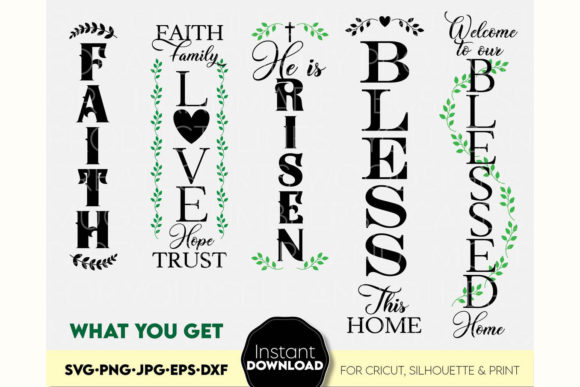
Bless This Home Christian Welcome Sign Review
As a designer who constantly evaluates digital assets for real-world production, I approach every new file with a specific question: will this actually stitch out beautifully, or is it just a pretty picture on a screen? When I first opened the Bless This Home Christian Welcome Sign bundle, I was looking for more than just aesthetic appeal. I needed to know if these graphics could translate into a high-quality machine embroidery design that customers would cherish. While the product description highlights its origins as an SVG bundle for cutting and printing, my focus here is strictly on its viability for needle and thread applications in a professional or serious hobbyist setting.
First Impressions and Visual Personality
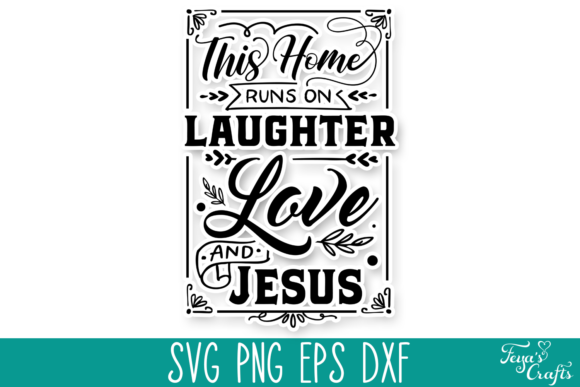
The immediate mood of this design is warm, traditional, and inviting. It carries a classic farmhouse elegance that resonates deeply with current market trends in home decor and faith-based gifts. Visually, the layout feels balanced, which is critical when converting 2D graphics into embroidery. The typography appears legible and purposeful, avoiding overly ornate scripts that often turn into thread nests during digitizing. For a crafter or Etsy seller, this visual clarity suggests the design will read well from a distance, whether on a porch sign or a stitched textile.
However, because this is marketed primarily as a cutting and printing file, there is an inherent translation step required. As a reviewer, I appreciate that the lines are clean. Clean vector lines usually indicate that if you choose to digitize this yourself, or if you purchase a pre-digitized version based on this art, the underlying structure is sound. There is no unnecessary clutter, meaning your stitch density can remain manageable without sacrificing detail. This simplicity is what makes the Bless This Home Christian Welcome Sign a strong candidate for versatile adaptation across different mediums within the Crafts category.
Real-World Application: The Custom Tea Towel Test
To truly evaluate this asset, I mentally placed it into a specific production scenario: creating a premium embroidered tea towel for a holiday gift line. Tea towels are a staple handmade product, but they present unique challenges due to the textured weave of linen or cotton terry. In this context, the Bless This Home Christian Welcome Sign needs to perform as more than just decoration; it needs to be durable and legible against a nubby background.
In this scenario, I envision using the design as a centerpiece applique or a dense fill stitch motif. If treating it as an applique design, the welcoming message becomes a tactile element that adds perceived value to the finished good. Customers buying personalized gifts often look for that dimensional quality that print cannot achieve. Alternatively, if stitching directly onto the towel, the design’s likely use of satin stitch borders and running stitch details would need to be adjusted to prevent sinking into the fabric texture. This mental test confirms that while the graphic is beautiful, its success in embroidery relies entirely on respecting the relationship between the art and the substrate.
Navigating Fabric Challenges and Technical Limits
Not every project is a stable tea towel. As creative entrepreneurs, we often work with difficult materials. Here is where caution is necessary when adapting the Bless This Home Christian Welcome Sign for apparel or stretchy goods:
- Stretchy Knits and Sweatshirts: If you plan to use this for sweatshirt embroidery or custom apparel, you must account for fabric distortion. The design likely contains horizontal elements that can cause tunneling on jersey knits if not properly stabilized. Always use a cut-away stabilizer and consider a water-soluble topping to keep stitches crisp.
- Small Hoop Sizes: Welcome signs often have wide aspect ratios. If you are limited to a 4x4 hoop, you may need to resize or split the design. Be wary of reducing text below safe legibility thresholds. Tiny lettering in a complex font can become unreadable mud once thread tension is applied.
- Dark Fabrics: High contrast is key. If stitching this on dark navy or black fabric for a boutique product, ensure your digitizing includes adequate underlay. Without proper foundation stitches, the top thread colors will get lost in the fabric grain, diminishing the professional finish of your commercial embroidery.
- Curved Surfaces: Avoid placing wide, rigid welcome sign designs on structured caps unless the design has been specifically arched. Flat artwork on a curved surface leads to registration errors and puckering at the edges.
Impact on Product Value and Brand Trust
Why does technical execution matter so much? Because in the world of digital product sellers and small shop owners, consistency builds trust. When a customer buys a personalized gift featuring the Bless This Home Christian Welcome Sign, they are buying into a promise of quality. A design that stitches out cleanly, with defined edges and appropriate density, signals professionalism. It tells the buyer that the maker understands their craft.
Furthermore, this design’s versatility enhances brand consistency. You could use the same graphic family for a printable mockup on your website, a vinyl decal for packaging, and an embroidered patch for a tote bag. This cross-medium cohesion strengthens brand recognition. However, this only works if the embroidery version maintains the integrity of the original art. A sloppy stitch-out undermines the value of the entire collection. For Etsy sellers, high-quality photos of the actual stitched result—rather than just digital renders—are essential for buyer engagement and reducing return rates.
Essential Designer Notes Before You Stitch
Before you load this design into your machine or list a finished product in your shop, please adhere to these practical guidelines derived from professional experience:
- Verify File Compatibility: Since the source is described as an SVG bundle for cutting/printing, confirm you have a proper embroidery file format (PES, DST, JEF, etc.) before purchasing for stitching purposes. Do not assume an SVG will auto-digitize perfectly without manual intervention.
- Test on Scrap Fabric: Never run a new design on a final product first. Test the Bless This Home Christian Welcome Sign on a scrap of the exact fabric and stabilizer combination you intend to use. Check for puckering, thread breaks, and alignment issues.
- Audit Stitch Density: Inspect the design in your embroidery software. Ensure there aren't areas of excessive density that could break needles or distort lightweight fabrics. Conversely, check that fill stitches aren't too sparse for the intended application.
- Check Licensing Terms: This is non-negotiable for business owners. Confirm whether the license allows for commercial use of finished physical products versus digital redistribution. Protect your business by understanding exactly what rights you have acquired.
- Mockup Realistically: When creating listings, use realistic textures in your printable mockups. Show the design on actual fabric textures rather than flat white backgrounds to set accurate customer expectations regarding size and scale.
- Thread Color Planning: Review your thread palette against the design. Faith-based home decor often benefits from muted, natural tones. Neon or overly synthetic thread colors might clash with the intended "bless this home" sentiment.
Ultimately, the Bless This Home Christian Welcome Sign offers a beautiful foundation for meaningful projects. Its strength lies in its timeless message and adaptable layout. Whether you are crafting a cherished family heirloom, stocking your Etsy shop with holiday inventory, or designing branded merchandise for a church event, success comes from treating this graphic with technical respect. By understanding the interplay between the digital art and the physical stitch, you transform a simple file into a tangible expression of warmth and craftsmanship that truly blesses the home.